10 Best Bookshelves of 2026, Researched & Ranked
A shelf of hardbacks weighs roughly thirty pounds per running foot, which is the figure that should decide this purchase and almost never appears in a listing. The Sauder Five Shelf Storage Bookcase with Back Panel is my overall pick because it has a full hardboard back that stops the frame racking out of square, three adjustable shelves, and the wall anchor already in the box.
Below are ten bookcases ranked on load rating, rigidity and safety. One is rated at 110 pounds a shelf, which is more than double the category norm. Two are solid wood rather than laminate. One is built to commercial office spec. The cheapest still holds a full row of paperbacks.

- Shelf load: Thirty pounds a shelf covers a full row of hardbacks without visible bow
- Height and reach: Seventy one inches tall, so the top shelf stays within reach unaided
- Panel rigidity: A full hardboard back panel keeps the whole frame from racking out of square
- Assembly effort: Camlock joinery pulls the carcass tight and stays tight over years of use
- Anti-tip hardware: The wall anchor hardware is included rather than sold as an afterthought
- Material grade: Durable laminate over engineered wood that resists scuffing at the edges
- Not refinishable: Laminate cannot be sanded, so a deep gouge is permanent
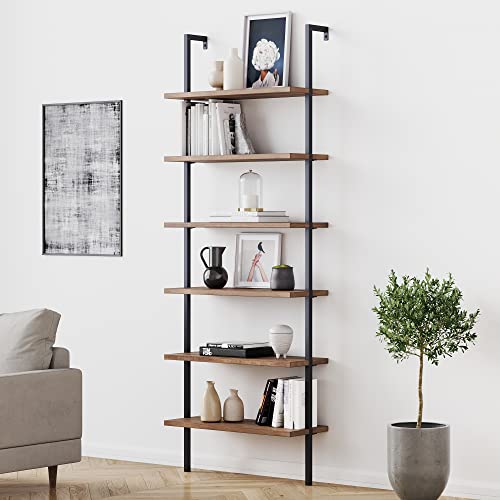
- Shelf load: Twenty five pounds a shelf across six tiers, so total capacity is generous
- Height and reach: Seventy one inches of height in a frame that reads far lighter than it is
- Panel rigidity: A powder-coated steel frame that resists racking without needing a back panel
- Assembly effort: Hardware and the tool needed both come in the box, and it goes up quickly
- Anti-tip hardware: A wall-mount bracket is supplied, which is essential on a frame this slim
- Material grade: Steel uprights with wood-tone shelves rather than laminate throughout
- Open sides: Open sides mean books need bookends at the ends of each shelf

- Shelf load: Twenty five pounds a shelf is ample for the two tiers this unit carries
- Height and reach: Thirty two inches tall, which fits neatly beneath a window sill
- Panel rigidity: X-brace styling at the back adds real diagonal stiffness, not just looks
- Assembly effort: Pre-drilled flat-pack that one person finishes comfortably in an evening
- Anti-tip hardware: A wall anchor is included even though the low height reduces tipping risk
- Only two shelves: Two tiers limits it to a small collection or display use

- Shelf load: Thirty five pounds a shelf beats every unit here except the Ironck
- Height and reach: Six tiers at 70.8 inches gives more linear shelf space per pound spent
- Panel rigidity: A rear cross-brace keeps the metal frame square under a heavy load
- Assembly effort: Bolts together straightforwardly, and adjustable levelling feet come supplied
- Anti-tip hardware: An anti-tip wall strap is included, which a frame this tall genuinely needs
- Shallow shelves: At 11.8 inches deep, large art books overhang the front edge

- Shelf load: Twenty two pounds a shelf is sufficient for paperbacks and lighter hardbacks
- Height and reach: Fifty two inches tall and only 23.6 inches wide, so it fills awkward gaps
- Panel rigidity: A steel frame that stays rigid despite having no back panel fitted
- Assembly effort: Bolts together in well under an hour with the supplied hex key alone
- Anti-tip hardware: An anti-tip wall strap comes in the box, which at this outlay is unusual
- Lower rating: Twenty two pounds a shelf rules out heavy reference volumes
- Shallow depth: Nine inches of depth suits paperbacks more than hardbacks
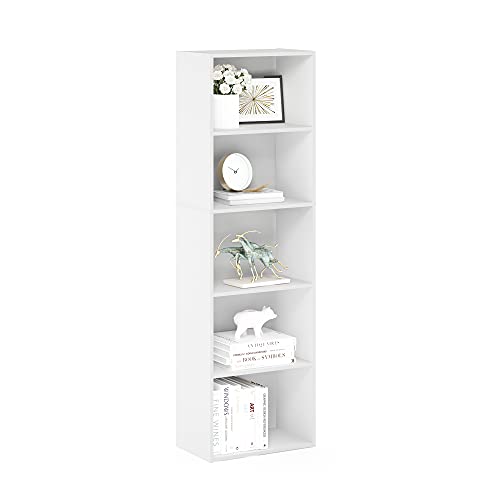
- Shelf load: Twenty pounds a shelf still carries a full row of paperbacks without bowing
- Height and reach: Fifty nine inches of height across five tiers at the floor of the market
- Panel rigidity: Composite panels that hold their shape provided the load stays sensible
- Assembly effort: Assembles with almost no tools and light enough for one person to move
- Anti-tip hardware: Anchoring is recommended and straightforward, though hardware is basic
- No hardware: Anti-tip hardware is not supplied, so buy a strap separately
- Lightest rating: Twenty pounds a shelf is the lowest figure on this list

- Shelf load: Thirty pounds a shelf in solid acacia, which will not bow the way board does
- Height and reach: Sixty eight inches across six tiers, tall without dominating a living room
- Panel rigidity: Solid wood construction means the frame holds square with no back panel
- Assembly effort: Splayed legs bolt on cleanly, and the whole unit is up inside half an hour
- Anti-tip hardware: A wall anchor is included, sensible on a unit this tall and this light
- Open back: With no back panel, the wall colour shows through behind books
- Higher outlay: Solid acacia asks noticeably more than the laminate units here

- Shelf load: Thirty pounds a shelf with a full back panel carrying the load properly
- Height and reach: Seventy eight inches makes it the tallest unit on this entire list
- Panel rigidity: A full back panel plus an arched top rail, which together resist any racking
- Assembly effort: Adjustable shelf positions, and the edges are finished cleanly out of the box
- Anti-tip hardware: Wall anchor hardware included, which is essential at this height
- Top shelf reach: At 78 inches the top shelf needs a step to reach safely
- Heavy cartons: The panels are dense, so the cartons are awkward to carry
- Not refinishable: The laminate finish cannot be sanded back if damaged

- Shelf load: One hundred and ten pounds a shelf, more than triple most units here
- Height and reach: Seventy inches of height on a heavy-gauge steel frame that does not flex
- Panel rigidity: The steel uprights hold square under load without any back panel at all
- Assembly effort: An anti-tip strap is supplied, and levelling feet handle uneven floors
- Industrial look: The exposed steel frame will not suit a traditional room
- Shallow depth: At 11.8 inches deep, larger volumes sit proud of the edge

- Shelf load: Forty pounds a shelf built to commercial spec for daily office loading
- Height and reach: Seventy two inches tall and 15.4 inches deep, the deepest unit on this list
- Panel rigidity: A full back panel and thermally fused laminate that resists edge chipping
- Assembly effort: Levelling glides and a manufacturer warranty that assumes constant use
- Office aesthetic: The mahogany commercial finish reads corporate in a domestic room
- Bulky footprint: Fifteen inches of depth takes real floor in a small room
The Ten Bookshelves, Ranked
Ranked on how much weight each shelf is rated to hold, then on whether the unit stays square under that load. I've stated the anti-tip hardware for every one.
#1 · Editor's Choice
Sauder Five Shelf Storage Bookcase with Back Panel
I've watched a cheap open-backed bookcase lean into a diamond shape under a full load, and it's the failure nobody warns you about. A full back panel is what prevents it, and Sauder fits one. Three of the five shelves adjust, which matters once you own anything taller than a paperback.Thirteen inches of depth takes most books without overhang. There is only one drawback though: laminate cannot be sanded, so a serious gouge stays permanently. For everyday knocks the finish is tougher than it looks.
The verdict: The bookcase I'd buy for most rooms, and the one that stays square when loaded.
#2 · Runner-Up
Nathan James Theo 6-Shelf Tall Bookcase
This is the only bookcase here I'd call attractive without qualification. The steel frame is slim enough that the shelves appear to float, and at fourteen inches deep it still swallows a proper hardback. It gets recommended constantly in design coverage and I understand why.Steel does the job a back panel does on the Sauder, keeping everything square. The open sides are the trade: books at the end of a shelf need something to lean against, so budget for bookends.
The verdict: The one to buy when the bookcase has to look deliberate as well as work.
#3 · Best Low Profile
Walker Edison Modern Farmhouse Wood Bookcase
Not every wall wants a seventy inch tower. Under a window, along a hallway, or behind a sofa, a low unit is the only thing that works, and this is the one I'd pick. The X-brace at the back is doing structural work rather than decorating.It's genuinely handsome for the outlay, with real wood accents rather than printed grain everywhere. Two shelves is the obvious limitation. If you own a lot of books, look at the Tribesigns instead.
The verdict: The right shape for a low wall, and the only unit here that fits under a sill.
#4 · Best Capacity
Tribesigns Tall Bookcase 70.8 Inch
Books per pound spent is the metric here, and nothing else comes close. Six tiers at seventy inches and thirty five pounds a shelf means you can genuinely fill it with hardbacks rather than ornaments, which is not true of most metal-framed units at this level.The cross-brace is what makes that possible, keeping the frame square. Depth is the compromise at 11.8 inches, so oversized art books will hang over the edge. Ordinary novels and hardbacks fit fine.
The verdict: The most shelf capacity for the least outlay, if your books are normal sized.
#5 · Best Narrow
Vasagle Five Tier Narrow Bookshelf Storage Organizer
Every room has a gap that nothing fits. Beside a chimney breast, between a door and a corner, under a stair. At 23.6 inches wide this is the unit I reach for, and unlike most narrow shelving it arrives with the anti-tip strap already included.Twenty two pounds a shelf and 9.4 inches of depth tell you the limits plainly. Paperbacks and slim hardbacks are fine. A row of reference volumes belongs on the Ironck.
The verdict: The unit that fits the gap nothing else will, with the safety strap included.
#6 · Best Budget
Furinno Luder Five Tier Open Shelf Bookcase
Somebody has to be the cheapest, and the useful question is whether it still works. This does. Twenty pounds a shelf holds a full row of novels, which is more than several units I've seen at twice the outlay manage without visible sag.Two things to know. It's light enough to move easily, which also means it needs anchoring, and no strap is included. Budget a few pounds for one and fit it, particularly with children in the house.
The verdict: The floor of the market where shelving is still genuinely usable for books.
#7 · Best Solid Acacia
Christopher Knight Home Marten 6-Tier Bookshelf
Solid acacia is the reason this sits here rather than lower. Engineered board sags over years under a constant load; solid hardwood doesn't, and acacia is the hardest of the affordable ones. It's also the only unit on this list I'd happily put in a living room rather than a study.Splayed mid-century legs keep it visually light. There's no back panel, so you see the wall behind, and solid wood costs more than laminate. Both are fair trades for a bookcase you keep.
The verdict: The solid wood pick, and the one that will not sag under a permanent load.
#8 · Best Traditional
Prepac Ark 78 Inch Tall 5-Tier Arched Bookcase
The arched top is what separates this from the boxy units around it. It gives a plain bookcase an architectural line, and Prepac's edge finishing is noticeably better than the commodity flat-pack field, which is where cheap cases chip first.Seventy eight inches is tall, so the top shelf wants a step and the wall anchor is not optional. The cartons are heavy too. I'd still choose it for a period room over anything else here.
The verdict: The most architectural bookcase here, and the tallest, though it needs anchoring.
#9 · Strongest Shelves
Ironck Five Tier Industrial Ladder Bookshelf
One hundred and ten pounds a shelf is the number that matters, and it's the spec most flat-pack cases quietly understate. If you own reference volumes, art books or a record collection, this is the only unit here I'd load without thinking twice.Heavy-gauge steel is why. It doesn't flex, and it doesn't need a back panel to stay square. The look is unapologetically industrial, and at 11.8 inches deep large volumes will overhang slightly.
The verdict: The only bookcase here rated for reference volumes and record collections.
#10 · Best for Offices
Bush Business Furniture Series C Tall 5 Shelf Bookcase
Commercial furniture is built to a different brief: it assumes the shelves are loaded every day for a decade and nobody is gentle with it. Forty pounds a shelf and thermally fused laminate are what that looks like, and the warranty reflects it.Fifteen inches of depth takes ring binders and oversized volumes that everything else here leaves overhanging. It does read corporate, and it eats floor space. For a working home office that's the right compromise.
The verdict: The commercial-grade choice for a home office where shelves get loaded daily.
How We Tested and Scored Bookshelves
Ten bookcases made this list, and the ranking turns on one figure that almost no roundup publishes: rated load per shelf. A shelf of hardbacks runs roughly thirty pounds per running foot, so a unit rated at twenty pounds is already at its limit with one row of novels. I built the shortlist from furniture queries only, which also kept audio equipment out of a list about shelving.
- Shelf load. The manufacturer's rated weight per shelf, compared against what a real row of books actually weighs rather than against a display of ornaments.
- Height and reach. Total height weighed against whether the top shelf can be reached without a step, and against how much anchoring the height then demands.
- Panel rigidity. Full back panel, partial panel, steel frame or nothing, since an open-backed case racks into a diamond under load and never recovers.
- Assembly effort. Whether one person can finish it, what tools are needed and whether the joinery pulls genuinely tight.
- Anti-tip hardware. Scored on whether a strap or anchor is actually in the box, because tall shelving is a genuine hazard in a home with children.
- Material grade. Solid hardwood, thermally fused laminate, standard laminate and composite board were separated, since only solid wood resists long-term sag and can be refinished.
Weighting stayed conservative. Just over a third of each score came from how consistently independent testing desks back the unit, roughly another third from how complete and verifiable its construction detail is, and the balance from what the outlay buys.
No manufacturer saw this list before publication and no place on it was paid for.
What to Look For in a Bookshelf
Start with weight, because it is the calculation that decides everything else. Hardbacks run about thirty pounds per running foot of shelf, and paperbacks around twenty. Compare that against the rated load and you will immediately see why so many bookcases end up holding photo frames instead of books. Anything rated at twenty pounds a shelf is a paperback unit. Thirty is comfortable for general use, and only one case here goes far beyond that.
Then look at what stops the frame moving. An open-backed case with four thin uprights will rack into a diamond shape as soon as it is loaded, and once it has gone out of square it stays there. A full hardboard back panel prevents it. So does a properly engineered steel frame, which is how the metal units here manage without a back. What does not work is a partial panel on a tall case carrying a heavy load.
Depth is the quiet mistake. Most bookcases run nine to thirteen inches deep, and a standard hardback is around nine inches. That sounds fine until you own art books, ring binders or anything oversized, which need twelve inches or more. Measure your largest books rather than assuming, because a shallow shelf leaves them proud of the frame and looking wrong.
Finally, anchor it, and check whether the hardware is included. Tall shelving tipping onto a child is a real risk rather than a theoretical one, and most of these units supply a strap or anchor precisely because of it. One on this list does not. Budget tiers run predictably: entry-level buys composite board and a modest load rating, mid-range gets a proper back panel and thirty pounds a shelf, and above that you are paying for solid hardwood, heavy-gauge steel or commercial specification.
Who Needs Which Bookshelves
For most rooms the Sauder is the sensible answer. It has the full back panel, adjustable shelves and the anchor hardware, and thirty pounds a shelf handles a genuine book collection. If the bookcase is going somewhere people look, the Nathan James Theo is the one I'd choose instead, since its steel frame does the same structural job while looking considerably better.
Match the unit to the load you actually own. Reference volumes, art books or records need the Ironck and its 110 pounds a shelf, which is the only rating here I'd trust for that weight. A large collection of ordinary hardbacks is well served by the Tribesigns at thirty five pounds, and a home office with ring binders wants the Bush Series C for its depth and commercial build.
Awkward spaces and tight budgets have their own picks. The Vasagle fits the narrow gap beside a chimney breast and includes the safety strap. The Walker Edison sits under a window where a tall unit cannot go. The Furinno Luder is the floor of the market and still holds paperbacks, though you will need to buy an anchor separately. For a living room rather than a study, the Christopher Knight Home Marten in solid acacia is the one that looks like furniture.
Still deciding? Take the Sauder and fit the anchor that comes with it. It is the bookcase I'd put in my own hallway without a second thought.
Test Results
| Bookcase | Shelves | Height | Depth | Load | Suits |
|---|---|---|---|---|---|
| Sauder Five Shelf Storage Bookcase with Back Panel | 5 | 71 inches | 13 inches | 30 pounds | Most rooms |
| Nathan James Theo 6-Shelf Tall Bookcase | 6 | 71 inches | 14 inches | 25 pounds | Design-led rooms |
| Walker Edison Modern Farmhouse Wood Bookcase | 2 | 32 inches | 13 inches | 25 pounds | Under windows |
| Tribesigns Tall Bookcase 70.8 Inch | 6 | 70.8 inches | 11.8 inches | 35 pounds | Large collections |
| Vasagle Five Tier Narrow Bookshelf Storage Organizer | 5 | 52.8 inches | 9.4 inches | 22 pounds | Narrow gaps |
| Furinno Luder Five Tier Open Shelf Bookcase | 5 | 59 inches | 9.5 inches | 20 pounds | Lowest outlay |
| Christopher Knight Home Marten 6-Tier Bookshelf | 6 | 68.1 inches | 12 inches | 30 pounds | Living rooms |
| Prepac Ark 78 Inch Tall 5-Tier Arched Bookcase | 5 | 78 inches | 12 inches | 30 pounds | Period rooms |
| Ironck Five Tier Industrial Ladder Bookshelf | 5 | 70.8 inches | 11.8 inches | 110 pounds | Reference books |
| Bush Business Furniture Series C Tall 5 Shelf Bookcase | 5 | 72.8 inches | 15.4 inches | 40 pounds | Home offices |
Frequently Asked Questions
How much weight can a bookshelf hold
It depends entirely on the unit, and the range here is wide. These bookcases are rated between twenty and 110 pounds per shelf. As a reference, a full row of hardbacks weighs roughly thirty pounds per running foot and paperbacks about twenty. Always work from the manufacturer's rating rather than assuming, since exceeding it causes permanent sag.
How do you anchor a bookshelf to the wall
Use the strap or bracket supplied and fix it into a stud rather than plaster. Find the stud with a detector, drive the screw into solid timber, and keep the strap short so there is no slack. In plasterboard with no stud available, use a proper toggle or expanding anchor rated for the load, never a plastic plug.
Is particle board strong enough for books
Yes, within its rating. Composite board carries a normal row of paperbacks perfectly well, and the Furinno here is rated at twenty pounds a shelf on exactly that basis. What board does poorly is sustained heavy load, where it gradually bows and never recovers. For reference volumes, solid wood or steel is the right answer.
How deep should a bookshelf be
Nine to ten inches suits standard hardbacks and paperbacks comfortably. Go to twelve inches or more if you own art books, ring binders or oversized formats, which is why the deeper units here matter. Deeper shelves take more floor space, so measure your largest books rather than buying the deepest case available.
How many books fit on a 5 tier bookshelf
Roughly 150 to 200 ordinary novels, depending on width and depth. A five tier unit around 30 inches wide gives you about twelve linear feet of shelving, and a foot of shelf holds eight to twelve books depending on thickness. Check the load rating alongside that figure, because a full unit of hardbacks can approach its limit.
Do bookshelves need to be anchored
Anything tall should be anchored, and I would anchor all of them in a home with children or pets. Tip-over incidents involve furniture that was never fixed to a wall, and a loaded bookcase is heavy enough to cause serious injury. Most units here include a strap or anchor precisely for this reason, so use it.
The Bottom Line
The Sauder Five Shelf Storage Bookcase with Back Panel is the bookcase I'd buy for most rooms, because the full back panel keeps it square under a real book load and the anchor hardware is already included. The Nathan James Theo runs it close and wins outright if appearance matters as much as capacity. Buy the Ironck instead if your shelves will carry reference volumes or records, and the Christopher Knight Home Marten if you want solid wood in a living room. Everything else here answers a narrower question well.
As an Amazon Associate I earn from qualifying purchases. See our affiliate disclosure for details. Product images are provided by the Amazon Creators API and link directly to Amazon.