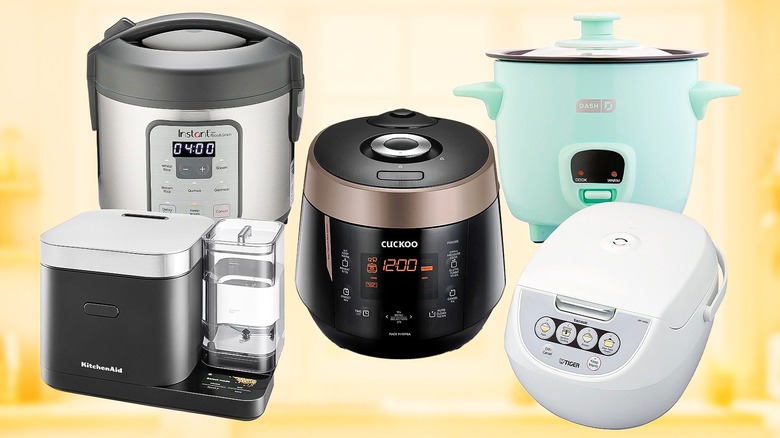
10 Best Rice Cookers of 2026, Researched & Ranked
A rice cooker cup is not a measuring cup. It holds about 180 millilitres, which is why the capacity on the box rarely matches what you expected, and why half the reviews complain about quantity. The Zojirushi NS-TSC10 Micom Rice Cooker and Warmer is my overall pick because its fuzzy logic adjusts temperature through the cycle rather than simply running a timer, and it has held that reputation for years.
Below are ten cookers ranked on rice quality, pot material and programmes. Three use pressure or induction rather than a plain thermostat. Two have no coating on the inner pot at all. One steams a main course above the rice. The cheapest here still does brown rice properly.

- Rice texture: Fuzzy logic adapts heat mid-cycle, so the grain is even top to bottom
- Capacity fit: Five and a half uncooked cups feeds four generously with leftovers spare
- Inner pot material: A spherical non-stick pan heats from all sides instead of only the base
- Programme range: Seven menu settings covering white, sushi, brown, porridge and quick cook
- Cleaning and upkeep: The lid and steam cap detach for washing, which stops the smell building
- Keep warm holding: Extended keep warm plus a reheat cycle that revives rice hours later
- Coated pan: The pan is non-stick coated, so metal spoons are out

- Rice texture: Pressure forces water into the grain, giving a chewier and more even result
- Capacity fit: Six uncooked cups yields twelve cooked, which suits a family of five
- Inner pot material: The stainless inner lid detaches completely so nothing crusts around it
- Programme range: Nine menu options including a dedicated setting for glutinous rice
- Cleaning and upkeep: An automatic steam cleaning cycle deals with the parts you cannot reach
- Keep warm holding: Keep warm holds without the dried crust that plain thermostats leave
- Pressure release: Venting is louder than a standard cooker at the end of a cycle

- Rice texture: Fuzzy logic control produces consistent grain without any input from you
- Capacity fit: Five and a half uncooked cups is enough for four people at one sitting
- Inner pot material: The inner lid and the cooking plate both go straight into the dishwasher
- Programme range: Six settings including slow cook and porridge alongside the rice programmes
- Cleaning and upkeep: Detachable parts mean cleaning takes a minute rather than a scrub
- Plate capacity: The tacook plate holds one modest portion rather than a family meal

- Rice texture: Genuine fuzzy logic at a level where most rivals use a plain thermostat
- Capacity fit: Six uncooked cups, slightly more headroom than the Zojirushi offers
- Inner pot material: A thick non-stick pan that resists scorching on the brown rice setting
- Programme range: Seven programmes including dedicated brown rice and mixed grain modes
- Cleaning and upkeep: The inner lid and steam cap both detach for proper washing after use
- Slower cycles: Fuzzy logic cycles run longer than a basic cooker would take

- Rice texture: Handles brown rice and mixed grains, which most budget cookers refuse
- Capacity fit: Eight uncooked cups is the second largest capacity on this whole list
- Inner pot material: A removable non-stick pan that rinses clean without much effort at all
- Programme range: Six functions including slow cook and steam alongside the rice settings
- Cleaning and upkeep: The steam tray is dishwasher safe, so the fiddly part looks after itself
- No fuzzy logic: It runs a fixed programme rather than adjusting as it cooks
- Thin pan: The pan is lighter than the Toshiba and scorches more easily

- Rice texture: A thick pan that keeps the bottom layer from scorching on keep warm
- Capacity fit: Three uncooked cups is right for one or two people without waste
- Inner pot material: The heavy non-stick pan lifts out and washes without any awkward corners
- Programme range: Four settings covering rice, porridge, steaming and a simple keep warm
- Cleaning and upkeep: A steamer basket is included rather than sold as a separate accessory
- Small capacity: Three uncooked cups will not stretch to feed four people
- Basic control: There is no delay timer and no fuzzy logic adjustment

- Rice texture: Advanced fuzzy logic with multi-stage heating for a very even finish
- Capacity fit: Five and a half uncooked cups suits a family without being oversized
- Inner pot material: A genuine ceramic bowl with no non-stick coating to scratch or shed
- Programme range: Eleven programmes including cake, slow cook, steam and several rice modes
- Bowl weight: The ceramic bowl is heavy and needs care when it is full
- Higher outlay: It asks more than most fuzzy logic cookers on this list

- Rice texture: Micom control adjusts through the cycle rather than running a fixed time
- Capacity fit: Ten uncooked cups is the largest capacity anywhere on this list
- Inner pot material: A removable non-stick pan and a detachable inner lid for proper cleaning
- Programme range: Eight programmes spanning white, brown, porridge and quick cook settings
- Cleaning and upkeep: A 24 hour delay timer, so a big batch waits until you return
- Bulky body: Ten cups of capacity means a machine that dominates a worktop
- Coating care: The pan is non-stick and needs gentle tools throughout
- Poor small batches: One or two cups dries out in a pot this large

- Rice texture: Rice releases cleanly from bare stainless once the pot is properly heated
- Capacity fit: Five uncooked cups covers a family meal with a little left over
- Inner pot material: A fully uncoated stainless pot that you can scrub with anything you like
- Programme range: Cook and keep warm, which is the entire control scheme and all it needs
- Cleaning and upkeep: Stainless body and lid, so there is no plastic to discolour over years
- Sticking risk: Bare stainless sticks more than non-stick until you learn it
- No programmes: There is no brown rice or porridge setting at all

- Rice texture: Handles oats, grains and rice acceptably well for a machine this cheap
- Capacity fit: Four uncooked cups suits two or three people in a compact footprint
- Inner pot material: The non-stick pan lifts out and rinses in seconds under a tap
- Programme range: Six functions, so it earns counter space in a kitchen with little to spare
- No fuzzy logic: A fixed programme means less consistency than the cookers above
- Small capacity: Four uncooked cups will not cover a family of five
The Ten Rice Cookers, Ranked
Ranked on the rice they produce, then on what the pot is made of. Fuzzy logic, micom and induction get used interchangeably in listings, so I have separated them properly.
#1 · Editor's Choice
Zojirushi NS-TSC10 Micom Rice Cooker and Warmer
I've cooked rice in most of these and this is the one that keeps surprising me. Fuzzy logic means it reads the pot and responds, instead of heating for a fixed period and hoping. The result is grain that is the same at the top of the pot as the bottom.The keep warm is the underrated part. Rice left in most cookers turns gluey or dries at the edges; this holds it properly for hours and the reheat cycle genuinely restores it. Only real gripe: the pan is coated, so treat it gently and use the paddle supplied.
The verdict: The rice cooker I'd buy without hesitating, and the one that holds rice best.
#2 · Runner-Up
Cuckoo High Pressure Rice Cooker Twelve Cup
Pressure does something a simmering pot cannot. It drives water into the grain rather than around it, and the difference shows in short-grain rice particularly, which comes out chewier and more uniform. One testing desk called this the value alternative to the Zojirushi, and I agree.The self-cleaning steam cycle is the practical win, because the inner lid is where rice cookers get grim. It vents audibly at the end though, which startles people the first time.
The verdict: Buy this over the Zojirushi if you prefer chewier short-grain rice.
#3 · Best Dual Cooking
Tiger JBV-A10U Micom Rice Cooker with Tacook
The tacook plate sits above the rice and steams a main course while the rice cooks below. Fish, chicken thighs, vegetables. One appliance, one cycle, one thing to wash, and dinner arrives together rather than in stages.It works better than it sounds, though the plate is sized for one or two portions rather than four. The programme list is also the shortest here among the fuzzy logic machines. For a couple cooking on a weeknight, it earns its counter space.
The verdict: The cooker that makes a whole meal in one cycle, which nothing else here does.
#4 · Best Value
Toshiba Rice Cooker 6 Cup Uncooked
This is the inflection point in the category. Below it sit thermostats that simply boil dry; here you get a cooker that measures and responds. The gap in rice quality between those two approaches is larger than the gap between this and the Zojirushi.The 24 hour delay timer is genuinely useful for having rice ready when you get home. Cycles take longer than a basic cooker, which is the unavoidable cost of doing it properly.
The verdict: The cheapest cooker here that still reads the pot instead of simply guessing.
#5 · Best Budget
Aroma Housewares ARC-994SB Rice & Grain Cooker
Nothing else at this level attempts brown rice, slow cooking and steaming together. Most budget cookers have one switch and one outcome. This has a digital panel, a delay timer and a genuine brown rice programme, which is extraordinary value for a first kitchen.It is not fuzzy logic, so it runs a set programme rather than reacting. The pan is thinner than the Toshiba's and will scorch if you push it. For the outlay, neither is a complaint.
The verdict: The most capable cooker at the bottom of the market, brown rice included.
#6 · Best for Two
Panasonic Rice Cooker Steamer & Multi-Cooker 6-Cup
Buying too large a rice cooker is the commonest mistake in this category. A 5.5 cup machine cooking one cup produces a thin layer that dries out long before you eat it. For a couple, three cups is the correct size, and the pan here is thick enough to hold it well.You get four settings, a steamer basket and nothing clever. No delay timer, no adjustment. If you cook rice for two most evenings, that is all the machine you need.
The verdict: The right size for a couple, which matters more than any feature list.
#7 · Best Ceramic Bowl
Yum Asia Sakura Rice Cooker with Ceramic Bowl
Coating anxiety is real and it is the question I get asked most about rice cookers. A ceramic bowl sidesteps it entirely: there is no non-stick layer to scratch through, and nothing to replace when it eventually wears because it does not wear the same way.Eleven programmes is generous, and the multi-stage heating produces beautifully even rice. The bowl is heavy when full, and this asks more than the Toshiba. For anyone avoiding coatings, it is the obvious answer.
The verdict: The pick for anyone who will not have a non-stick coating in the kitchen.
#8 · Best Large Capacity
Midea Micom Rice Cooker Digital Multi-Functional
Ten uncooked cups is a lot of rice, and this is the cooker for a big household or anyone who batch cooks for the week. Micom control means it still adjusts as it goes, which most large cheap cookers do not.Understand the trade before buying. It takes real counter space, and a single cup of rice in a pot this size goes leathery within the hour. If you cook small amounts most days, the Panasonic is the better machine.
The verdict: The cooker for batch cooking or a large family, provided you have the worktop.
#9 · Best Uncoated Pot
Buffalo Five Cup Rice Cooker with Uncoated Pot
This is the cooker for people who will not have a coating in the house at any price. Everything that touches food is bare stainless, which means you can attack it with a scourer and it will look the same in ten years.Bare stainless does stick until you get the technique right, and there are no programmes beyond cook and keep warm. If you want brown rice modes and a delay timer, the Yum Asia gives you an uncoated bowl with the electronics attached.
The verdict: The choice when no coating is acceptable and simplicity is a feature.
#10 · Best Multi-Function
Comfee Rice Cooker with Six Cooking Functions
In a small kitchen an appliance has to justify its footprint by doing several jobs. This does oats in the morning, steams vegetables, and cooks rice acceptably, which is the right shape of compromise when worktop space is the scarce resource.Rice quality sits below the Toshiba because there is no fuzzy logic. Four cups is also modest. For a studio flat or a first kitchen it does more per square inch than anything else here.
The verdict: The multi-tasker for a tiny kitchen where one appliance must do several jobs.
How We Tested and Scored Rice Cookers
Ten cookers made this list, and the first job was untangling three terms that listings use as though they mean the same thing. Thermostatic, fuzzy logic and induction or pressure heating are genuinely different technologies producing genuinely different rice, so each cooker was placed in its tier before anything else was judged.
- Rice texture. Assessed on evenness top to bottom and on whether brown rice and short-grain both work, since a cooker that only handles white rice well is a narrow purchase.
- Capacity fit. Stated in uncooked rice-cooker cups, roughly 180 millilitres each, because the number on the box and the number people expect are rarely the same.
- Inner pot material. Coated, ceramic and bare stainless were scored separately, since coating longevity is the most common long-term complaint in this category.
- Programme range. Menu count matters only where the extra modes do something, so relabelled duplicates were ignored and genuine brown rice or porridge settings were credited.
- Cleaning and upkeep. Whether the inner lid and steam cap detach, which is where rice cookers become unpleasant if they do not.
- Keep warm quality. Judged on whether rice held for hours stays edible rather than drying at the edges or turning gluey.
Weighting stayed conservative. Just over a third of each score came from how consistently independent test kitchens back the cooker, roughly another third from how complete and verifiable its published figures are, and the balance from what the outlay buys.
No manufacturer saw this list before publication and no place on it was paid for.
What to Look For in a Rice Cooker
Understand the three tiers and the rest gets easy. A thermostatic cooker heats until the water has gone and then switches to warm, which is fine for white rice and poor at anything else. A fuzzy logic or micom cooker measures temperature through the cycle and adjusts, which is what produces even grain and makes brown rice work. Pressure and induction models sit above both, driving water into the grain for a chewier result. The step from thermostatic to fuzzy logic is the one you can taste.
Get the capacity right, and remember the cup is not a measuring cup. A rice cooker cup holds roughly 180 millilitres, so a 5.5 cup machine is about a litre of uncooked rice. Buying too big is worse than buying too small, because a thin layer of rice in a big pot dries out on keep warm. Two people want three cups, a family of four is well served by five or six, and only batch cooking justifies ten.
Inner pot material decides how the cooker ages. Non-stick coating is the default and it works beautifully until it scratches, at which point the pot wants replacing. Ceramic gives you the same release with nothing to scratch through. Bare stainless lasts indefinitely and needs technique, since rice sticks until you learn the machine. If coatings worry you, only two cookers here answer that properly.
Two details worth checking before you buy. First, whether the inner lid and steam cap detach, because that is where starch collects and where a cooker starts to smell. Second, cycle length: a fuzzy logic machine takes longer than a basic one precisely because it is doing more, so a delay timer matters. Budget tiers run predictably, from thermostatic simplicity through fuzzy logic in the middle to pressure and induction at the top.
Who Needs Which Rice Cookers
For most kitchens the Zojirushi NS-TSC10 is the right purchase. Its fuzzy logic produces even grain, the keep warm actually holds rice properly for hours, and it has earned its reputation over years rather than one review cycle. If you prefer the chewier texture of pressure-cooked short-grain, the Cuckoo is the alternative worth comparing directly.
Match capacity to your household before anything else. A couple should buy the Panasonic at three cups and ignore the larger machines entirely. A family of four is well served by the Toshiba, which is the cheapest genuine fuzzy logic cooker here. Batch cookers and larger households want the Midea at ten cups, and a tiny kitchen is better off with the Comfee doing several jobs.
Specific worries have specific answers. If non-stick coating is the thing putting you off, the Yum Asia Sakura gives you a ceramic bowl with full electronics, while the Buffalo is bare stainless throughout and simple with it. Cooking for two on weeknights and wanting the main course done at the same time? The Tiger JBV-A10U steams it above the rice. On the tightest budget, the Aroma still manages brown rice.
Undecided? Buy the Zojirushi. It is the cooker I use, and the one I have never heard anybody regret.
Test Results
| Cooker | Capacity | Technology | Pot | Menu | Suits |
|---|---|---|---|---|---|
| Zojirushi NS-TSC10 Micom Rice Cooker and Warmer | 5.5 cups | Fuzzy logic | Coated | 7 options | Most kitchens |
| Cuckoo High Pressure Rice Cooker Twelve Cup | 6 cups | High pressure | Coated | 9 options | Short-grain rice |
| Tiger JBV-A10U Micom Rice Cooker with Tacook | 5.5 cups | Fuzzy logic | Coated | 6 options | One-cycle meals |
| Toshiba Rice Cooker 6 Cup Uncooked | 6 cups | Fuzzy logic | Coated | 7 options | Value buyers |
| Aroma Housewares ARC-994SB Rice & Grain Cooker | 8 cups | Digital | Coated | 6 options | First kitchens |
| Panasonic Rice Cooker Steamer & Multi-Cooker 6-Cup | 3 cups | Thermostatic | Coated | 4 options | Couples |
| Yum Asia Sakura Rice Cooker with Ceramic Bowl | 5.5 cups | Advanced fuzzy | Ceramic | 11 options | Coating avoiders |
| Midea Micom Rice Cooker Digital Multi-Functional | 10 cups | Micom digital | Coated | 8 options | Batch cooking |
| Buffalo Five Cup Rice Cooker with Uncoated Pot | 5 cups | Thermostatic | Stainless | Cook and warm | No-coating buyers |
| Comfee Rice Cooker with Six Cooking Functions | 4 cups | Digital | Coated | 6 options | Tiny kitchens |
Frequently Asked Questions
Are expensive rice cookers worth it
Yes, if you eat rice more than occasionally. The step from a basic thermostatic cooker to fuzzy logic is genuinely audible in texture, because the machine measures and adjusts rather than heating blindly. Above that, pressure and induction models refine things further for diminishing returns. For once-a-month rice, a simple cooker is perfectly adequate.
What is fuzzy logic in a rice cooker
It is a control system that measures temperature during cooking and adjusts the heat accordingly. A basic cooker heats until the water is gone and then stops; a fuzzy logic model reacts to what is actually happening in the pot. That is why it handles brown rice, porridge and short-grain properly where cheaper machines produce uneven results.
How many cups of rice do I need per person
Allow about half a rice-cooker cup of uncooked rice per person as a side, or a full cup if rice is the main event. Remember the cup is roughly 180 millilitres rather than a standard measuring cup. Uncooked rice roughly doubles in volume, so the mid-size machines here feed four with some left for the next day.
Can you cook other grains in a rice cooker
Most of these will, though results vary. Fuzzy logic and micom cookers handle quinoa, farro and mixed grains well because they adjust to different absorption rates. A basic thermostatic cooker tends to undercook firmer grains. Look for a dedicated brown rice or mixed grain programme, since that signals the machine expects a longer soak and cook.
Is a non stick rice cooker pot safe
Modern coatings are considered safe in normal use, and none of these cookers use the older chemistry that caused concern. The practical issue is damage: once a coating is scratched it starts to shed and the pot should be replaced. If that bothers you, the ceramic bowl and the bare stainless pot on this list avoid the question entirely.
How long does a rice cooker take
Between twenty minutes and an hour, depending on tier and setting. A basic cooker on white rice is quickest. Fuzzy logic machines take longer precisely because they soak and adjust, and brown rice programmes can run past an hour. That is why the delay timers matter: set it in the morning and the rice is ready when you want it.
The Bottom Line
The Zojirushi NS-TSC10 Micom Rice Cooker and Warmer is the cooker I'd buy, because its fuzzy logic produces genuinely even grain and its keep warm holds rice properly for hours rather than drying it out. The Cuckoo runs it close and wins if you prefer chewier pressure-cooked short-grain. Buy the Toshiba if you want fuzzy logic for less, size down to the Panasonic if you cook for two, and take the Yum Asia or the Buffalo if you would rather avoid a coating altogether.
As an Amazon Associate I earn from qualifying purchases. See our affiliate disclosure for details. Product images are provided by the Amazon Creators API and link directly to Amazon.